


ABS 3D Printing Speed Guide | Optimizing Print Quality & Efficiency
ABS is a useful material for strong, heat-resistant and functional 3D printed parts, but it requires more control than PLA. Print speed is one of the most important settings because it affects layer bonding, warping, surface quality and overall reliability.
If ABS is printed too quickly without a stable environment, the model may lift from the bed, crack between layers or show poor surface finish. If it is printed too slowly, heat build-up and long print times can reduce efficiency without improving the final result.
This guide explains how to optimise ABS print speed, why enclosed printers are recommended and how to tune ABS settings on Creality K1 Series and K2 Series machines.
Why ABS Print Speed Needs Careful Control
ABS stands for acrylonitrile butadiene styrene. It is widely used because it offers toughness, impact resistance and better heat resistance than many beginner materials.
The challenge is that ABS shrinks as it cools. If the material cools too quickly or unevenly, the print can warp, split or detach from the build plate. Speed influences how each layer is deposited, how well it bonds and how much time it has to stabilise.
When tuning ABS speed, focus on four key areas:
- Adhesion: The first layer must bond securely to the heated bed.
- Layer strength: Each layer needs enough heat and time to fuse properly.
- Dimensional stability: ABS shrinkage must be controlled through temperature and enclosure stability.
- Surface quality: Excessive speed can create ringing, rough walls and inconsistent extrusion.
Recommended ABS Print Speed Range
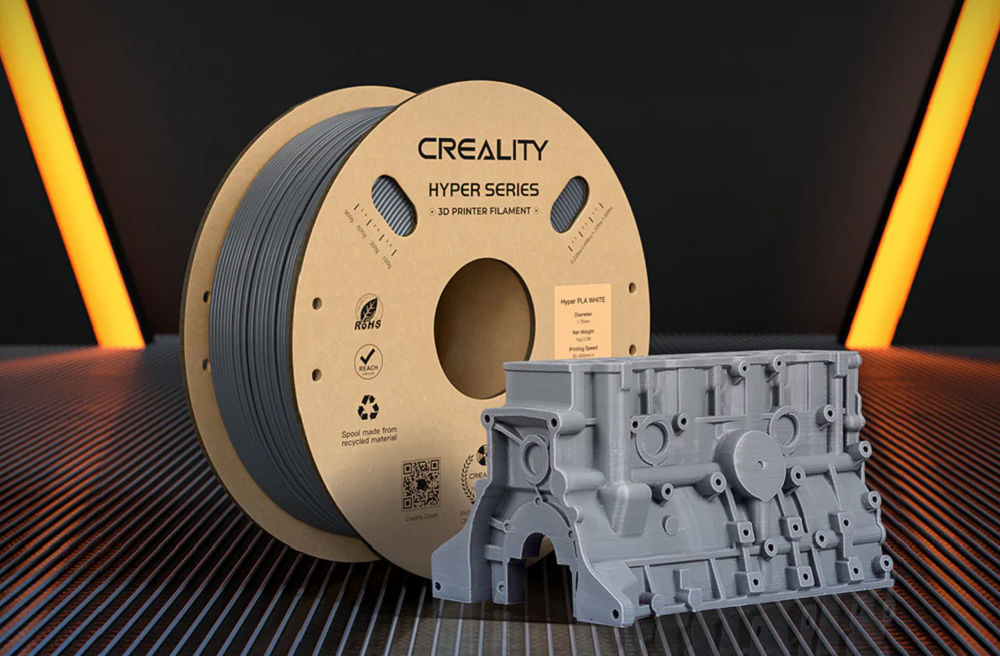
For most ABS prints, a practical starting range is 30–60 mm/s. This range gives a good balance between quality, strength and reliability.
Advanced enclosed printers may support higher speeds, but only when temperature, flow rate, bed adhesion and chamber stability are also well controlled. For beginners, it is better to start slower and increase speed gradually after the profile is reliable.
| Application | Suggested Speed | Recommendation |
|---|---|---|
| General ABS parts | 40–60 mm/s | Good baseline for everyday functional printing. |
| Large parts | 30–45 mm/s | Helps reduce warping and improve bed adhesion. |
| High-detail surfaces | 25–40 mm/s | Better for visible walls, corners and text. |
| Fast prototypes | 50–80 mm/s | Use only on stable enclosed printers with adequate flow capacity. |
ABS Temperature Settings
ABS normally requires a higher nozzle and bed temperature than PLA. The exact settings depend on the filament brand, printer and model, but these values are a useful starting point:
- Nozzle temperature: 230–260°C
- Bed temperature: 90–110°C
- Cooling fan: Off or low
- Enclosure: Recommended for consistent results
If the nozzle temperature is too low, layer adhesion may suffer. If it is too high, the print may show stringing, blobs or softened details. Adjust in small steps and inspect the result carefully.
You can explore Creality EU 3D printing filament to choose materials that match your project and printer setup.
Why Enclosed Printers Are Better for ABS
ABS printing benefits from a warm and stable environment. An enclosure helps protect the model from draughts and rapid cooling, which are common causes of warping and cracking.
An enclosed or chamber-assisted printer helps to:
- Maintain a more stable temperature around the print.
- Reduce sudden cooling from room airflow.
- Improve layer bonding.
- Reduce corner lifting on larger parts.
- Support more reliable ABS and ASA printing.
This is why ABS is generally better suited to enclosed Creality printers such as the K1 Series and K2 Series rather than open-frame beginner machines.
Recommended Creality Printers for ABS
For ABS, the printer recommendation should focus on enclosed or chamber-stable models. While open-frame printers can be used for small ABS parts with careful tuning, they are more sensitive to airflow and temperature changes.
K1 Series
The K1 Series is suitable for users who want a faster and more controlled FDM printing experience. Its enclosed design helps create a more stable environment for ABS and ASA compared with open-frame printers.
K2 Series
The K2 Series is a strong option for users who need more advanced performance, larger build options or a more capable high-temperature workflow. For ABS printing, its more controlled printing environment can help improve adhesion, strength and repeatability.
You can browse Creality EU K1 and K2 Series 3D printers to find a suitable enclosed printer for ABS and ASA projects.
How to Tune ABS Print Speed

1. Build a Stable Baseline First
Start with a moderate speed around 40 mm/s. This allows you to check whether bed adhesion, temperature and layer bonding are reliable before increasing speed.
Once the print is stable, increase speed in small steps and compare the result. Watch for warping, gaps, rough walls, ringing and weak layers.
2. Slow Down the First Layer
The first layer should be slower than the rest of the print. A first-layer speed around 15–25 mm/s can improve adhesion and reduce the risk of the print lifting from the bed.
If your first layer is inconsistent, check the bed height, Z-offset and build plate cleanliness before changing the main print speed. For more help, read the 3D printer bed leveling guide.
3. Keep Cooling Low
ABS usually needs little or no part cooling. Too much cooling can make the layers contract too quickly, causing warping or layer separation.
For small bridges or sharp details, limited cooling may help, but it should be used carefully. The priority is to maintain strong layer bonding.
4. Check Hotend Flow Capacity
As print speed increases, the hotend must melt more filament per second. If the hotend cannot keep up, the print may show under-extrusion, weak walls or gaps.
Before pushing ABS speed higher, check:
- Nozzle temperature
- Nozzle size
- Volumetric flow limit
- Extruder stability
- Filament diameter consistency
- Slicer flow settings
5. Tune Retraction and Travel Settings
ABS can string if the temperature is too high or if retraction settings are not suitable. However, too much retraction can create its own problems, including clogs and inconsistent extrusion.
Adjust retraction gradually and run a small test print after each change. If stringing appears, see the 3D print stringing guide for retraction and temperature tips.
ABS Print Speed by Part Type
- Functional Parts: For brackets, housings and workshop parts, use moderate speed and prioritise layer strength. A setting around 35–50 mm/s is a good starting point.
- Large Flat Prints: Large ABS parts are more likely to warp. Use slower speed, strong bed adhesion, a heated bed and an enclosed printer. A brim can help reduce corner lifting.
- Visible Exterior Parts: For clean surfaces, reduce outer wall speed. Inner walls and infill can often run slightly faster if the machine remains stable.
- Draft Prototypes: When appearance is less important, speed can be increased after the profile is stable. Check that the prototype still has enough strength for handling and testing.
Common ABS Speed Mistakes
1. Printing ABS Too Fast on an Open Printer
ABS is sensitive to temperature changes. Printing too fast without an enclosure often causes warping, poor adhesion and weak layers.
2. Using Too Much Fan Cooling
ABS needs slower, more controlled cooling than PLA. Excessive fan speed can cause cracks and layer separation.
3. Ignoring the First Layer
A poor first layer can ruin the whole print. Before increasing speed, make sure the bed is clean, level and heated correctly.
4. Only Changing Speed
ABS speed cannot be tuned in isolation. Temperature, cooling, enclosure stability, retraction and bed adhesion all need to work together.
5. Using the Wrong Printer Type
Open-frame printers are not ideal for regular ABS printing. For better repeatability, use an enclosed Creality K1 Series or K2 Series printer.
ABS vs PLA, PETG and ASA
PLA is easier to print quickly because it needs lower temperatures and is less prone to warping. PETG is tougher than PLA but can be stringier. ASA is similar to ABS in many ways and also benefits from an enclosed, stable environment.
For ABS and ASA, environmental control is often more important than raw speed. A slower but stable print is usually better than a fast print that lifts, cracks or loses accuracy.
Ventilation and Safe Printing
ABS should be printed in a well-ventilated space. An enclosure helps stabilise the print environment, but users should still follow safe indoor printing practices and the manufacturer’s guidance.
- Use ABS in a ventilated area.
- Keep the printer away from cold draughts.
- Avoid opening the enclosure repeatedly during printing.
- Let the model cool gradually before removing it.
- Follow local guidance for indoor material use.
Suggested ABS Starting Settings
| Setting | Suggested Starting Point |
|---|---|
| Main print speed | 40 mm/s |
| First-layer speed | 15–25 mm/s |
| Nozzle temperature | 240–250°C |
| Bed temperature | 95–105°C |
| Cooling fan | Off or low |
| Enclosure | Recommended |
| Brim | Recommended for large or narrow parts |
These values are starting points only. Always adjust based on your filament, printer, nozzle size and model requirements.
Conclusion
ABS print speed is about balance. A typical range of 30–60 mm/s is a reliable starting point for many users, while higher speeds should only be used when the printer, hotend, filament and enclosure can support them.
For better ABS results, use an enclosed or chamber-stable printer, keep the bed hot, minimise cooling, tune retraction and slow down the first layer. Creality K1 Series and K2 Series printers are more suitable for regular ABS and ASA printing than open-frame machines.
Once your ABS profile is stable, increase speed gradually and test with real models. This approach helps you create stronger, cleaner and more reliable ABS prints with fewer failures.
Recent News

Why Choose Between Speed and Detail? A Deep Dive into K3 Mix Nozzle Printing

Creality Ender Series Comparison: Which Ender 3D Printer?

How to Unclog a 3D Printer Nozzle Safely
