


Maximizing Strength:Importance of Wall Thickness 3D Printing
In 3D printing, wall thickness plays a pivotal role. It's a critical factor that directly affects the strength, durability and overall quality of the printed object.
However, determining the optimal wall thickness can be a complex task. It requires a careful balance between material usage, print time, and structural integrity.
This article aims to shed light on the importance of wall thickness in 3D printing. It will guide you through the process of determining the ideal wall thickness for your specific projects.
What is Wall Thickness in 3D Printing
In 3D printing, wall thickness is the distance between one surface of an object and its opposite surface. This parameter, also known as "shell thickness," can be adjusted in your 3D printing software. The interior of a 3D print is called the infill, which can vary in density from 0% (hollow) to 100% (solid) and can have various structural patterns. The shell, on the other hand, is always printed as a solid layer.
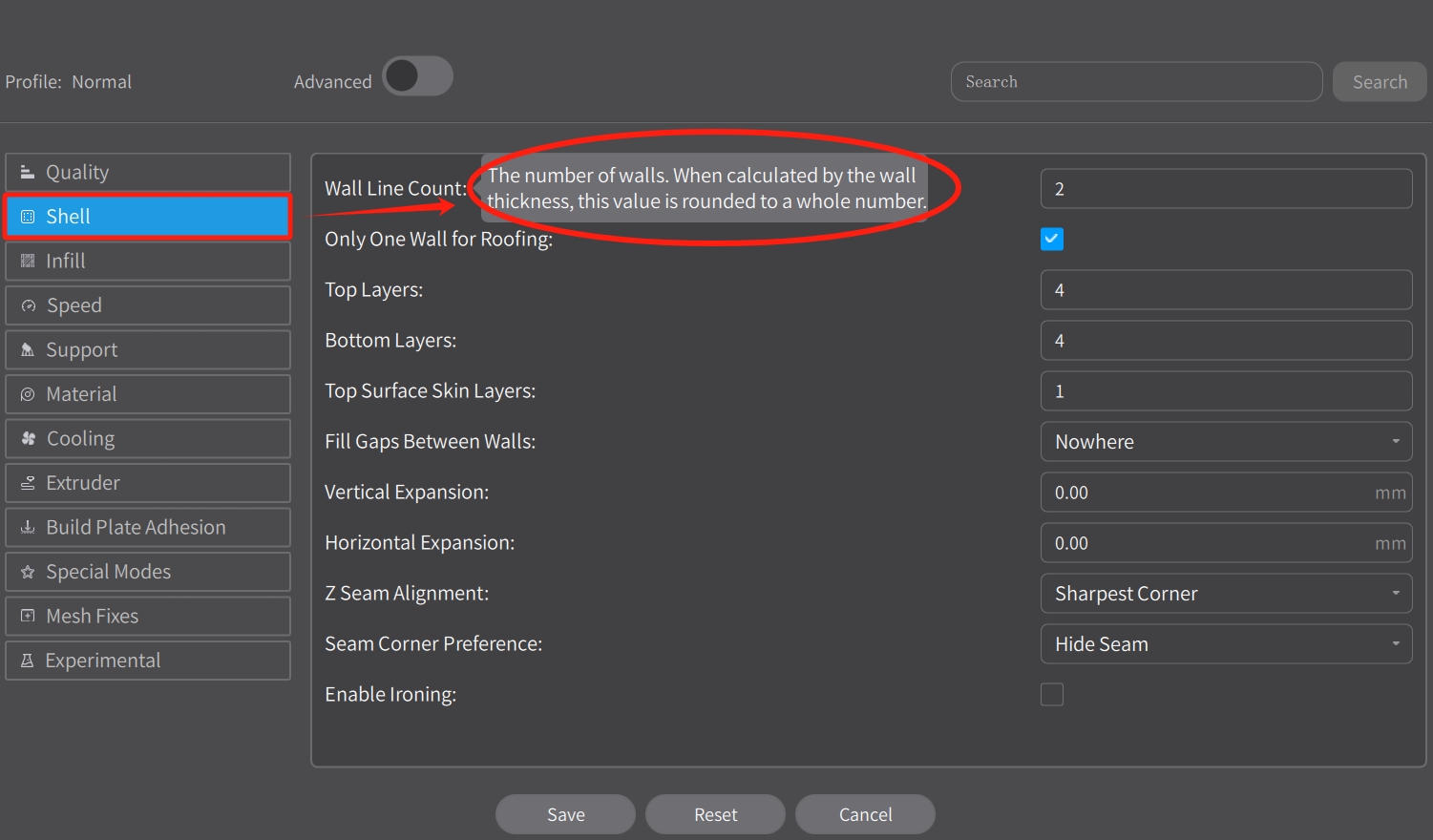
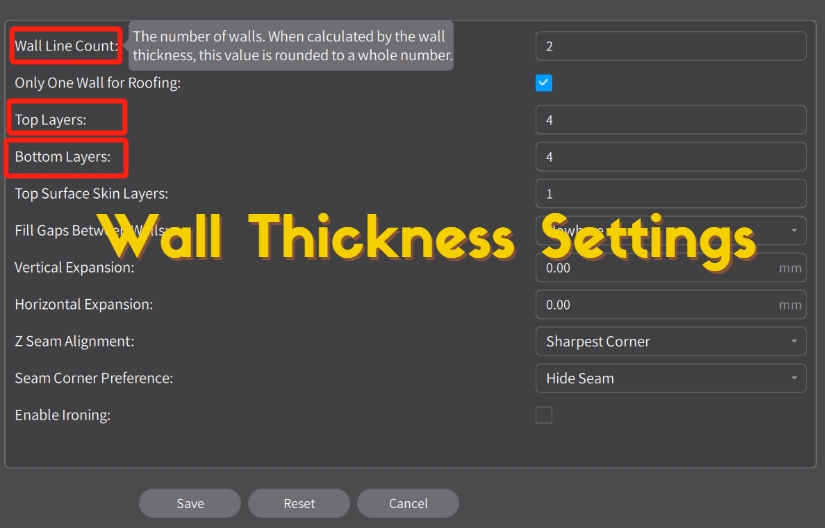
The Definition and Settings of Wall Thickness in Creality Print Software
The wall thickness you select can greatly influence the quality of your print, impacting not only the strength and durability of the object but also the material consumption and print duration.
Choosing the right balance of wall thickness is critical: a wall that is too thin can result in a fragile and easily breakable print, while a wall that is too thick can result in unnecessary material waste and longer print times.
Key factors influenced by wall thickness in 3D printing include:
- Strength and durability of the printed object
- Material consumption
- Print duration
- Surface finish and appearance
- Thermal and acoustic properties of the printed object
How thick should 3D printed walls be
The strength of a 3D printed object is directly related to its wall thickness, with thicker walls generally resulting in stronger objects. This is particularly important for items subjected to mechanical stress or strain. Examples include gears, brackets, and structural components that need to endure high loads or repetitive motion; custom tools, jigs, and fixtures used in manufacturing or assembly processes; and protective housings for electronic devices.
However, it is not always necessary or beneficial to have the thickest possible walls. Excessively thick walls can lead to longer print times and increased material consumption.
For purely decorative items or those not subject to stress, thinner walls may be sufficient. Examples include vases, ornaments, scale models used for architectural presentations, and lightweight containers such as custom packaging and bottles.
Therefore, it is crucial to adjust your shell thickness settings according to the purpose of your 3D printed part. Striking a balance that meets the specific requirements of your print is essential. The goal is to optimize strength while minimizing material usage and print time.
What is a good wall thickness for 3D printing
Different 3D printing materials require varying wall thicknesses. For instance, PLA, a widely used 3D printing material, may necessitate a different optimal wall thickness compared to materials like ABS or PETG. The ideal wall thickness is influenced by the material's properties, such as strength, flexibility, and heat resistance. Therefore, knowing the characteristics of the material you are using is crucial.
The minimum wall thickness for 3D printing depends on several factors, including the type of material, the printer's resolution, and the design of the object. Here are some general guidelines for minimum wall thickness in 3D printing:
For regular, moderately strong parts, a wall thickness of 0.8-1.6 mm (3-4 wall lines) and a top and bottom thickness of 0.8-1.2 mm (4-6 layers, depending on the layer height) are common values.
- It is advisable to use multiples of your nozzle diameter for wall thickness, as this ensures optimal print quality.
- Similarly, using multiples of your layer height for top and bottom thickness is recommended, as full-size layers yield the best results.
- For higher-strength parts, consider larger values, such as a wall thickness of 2-3 mm and a top and bottom thickness of 1.6-2 mm.
- For display-oriented models that do not require much strength, a wall thickness of 0.4 mm and a top and bottom thickness of 0.2-0.8 mm are usually sufficient.
By tailoring the wall thickness to the specific needs of your print and the characteristics of the material, you can achieve the best balance of strength, material usage, and print time.
Conclusion
In conclusion, wall thickness is a crucial factor in 3D printing, determining the strength, durability, and material usage of the printed object. Striking the right balance between material use and structural integrity can be challenging. The goal is to create a 3D printed object that is strong, durable, and efficient in its use of material, highlighting the importance of understanding wall thickness.
Related Articles:
FDM 3D Printer Troubleshooting Guide >>
3D Printer Layer Shift Troubleshooting >>
Ideal PLA Bed and Nozzle Temperature Guidelines >>
Recent News

8 Halloween 3D Print Ideas to Make Before October 31

Ender Series 3D Printers Parameter Comparison

Creality Back-to-School Sale 2026: Save Up to 50% on 3D Printers and More
