


What is PVB Filament? Everything You Need to Know
Although PVB (Polyvinyl Butyral) filament might not yet have the market presence of popular materials like PLA or PETG, it presents a compelling set of characteristics that make it worthwhile for both enthusiasts and professionals in 3D printing.
In this article, we’ll delve deeper into PVB's unique material properties, its advantages and limitations, optimal printing settings, and how to post-process for stellar results.
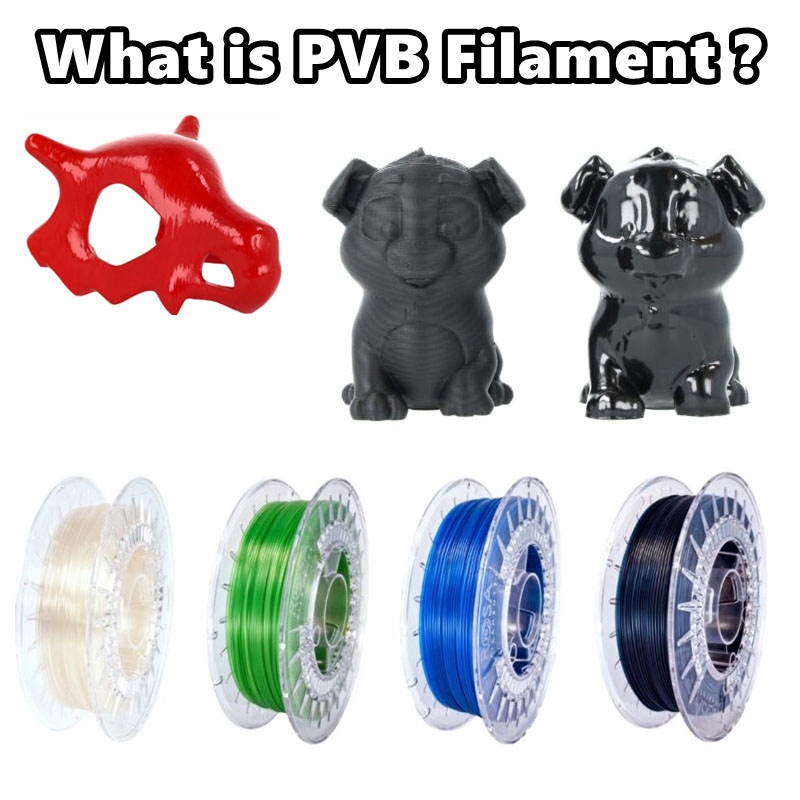
What is PVB Filament?
PVB filament is a type of plastic used predominantly in 3D printing, known for its excellent properties such as clarity, flexibility, and strong adhesion to print beds.
Polyvinyl Butyral is initially colorless, non-toxic, and has a high resistance to impact, which not only ensures safety during the printing process but also increases the durability of the finished products.
Properties of PVB Filament
Appearance
PVB is slightly transparent which makes it ideal for projects like vases and lampshades, offering a semblance of translucency that allows light to pass through but is not as clear as glass. Different brands may offer varying levels of transparency, and the final clarity of the printed object also depends on specific print parameters such as wall thickness and infill.
Flexibility and Durability
PVB stands out with higher tensile strength and impact resistance than some more conventional filaments such as ABS and PETG, yet maintains a slight flexibility that is lesser than TPU.
It's perfect for prints where aesthetics are prioritized over functional durability. However, PVB's glass transition temperature is around 60°C, relatively low, which may limit its use in high-temperature environments.
Excellent Adhesion
PVB's excellent adhesion properties prevent warping and reduce the likelihood of print failures. This attribute guarantees improved print reliability and efficiency for users at all experience levels.
Low-Melting Point
Having a low melting point compared to other filaments, PVB is easier to print with. It requires lower extrusion temperatures, thereby making it compatible with most 3D printers without the need for specialized equipment.
Challenges with PVB Filament
Hygroscopy:
PVB is highly hygroscopic and can attract and absorb moisture from the air, leading to printing issues like bubbles and stringing. Adequate storage in dry conditions is crucial, ideally in vacuum bags or containers with desiccants. It's recommended to dry PVB filament at 60°C for at least four hours before printing.
Printing with PVB Filament
Optimal Settings:
- Optimal Printing Temperature: To achieve the best results with PVB filament, keep the extruder temperature between 220°C and 250°C.
- Bed Temperature: A bed temperature around 60°C to 75°C usually works well.
- Enclosed Printer: Employ an enclosed printer, when possible, to maintain a consistent temperature to avoid drafts affecting the print.
PVB does not require an enclosed printer and is less prone to warping compared to ABS. For enhanced bed adhesion and smooth surface finishes, printing on a smooth PEI or satin sheet is advisable. Switching to a smaller layer height can also improve surface quality, though using larger nozzles could speed up the print process without affecting the eventual finish due to post-process smoothing.
Post-Processing PVB
A key advantage of using PVB filament is the ease of post-processing to achieve a glossy finish. Soluble in Isopropyl Alcohol (IPA), PVB can be smoothed or bonded simply through IPA application. Options range from using a smoothing station like the Polysher, applying IPA via an airbrush, immersing the part in an IPA bath, or manually spreading it with a brush.
Each method has its nuances, and careful application is necessary to avoid leaving marks on the print.
Bonding Parts:
IPA not only smooths but also can bond PVB parts. Applying a few drops on joints turns them tacky, ready to be adhered to another part, making it excellent for larger, multi-piece projects.
FAQs about PVB Filament
1. What are the main advantages of using PVB filament for 3D printing?
PVB filament offers several notable advantages, including its translucent appearance which is suitable for aesthetic projects like vases or lampshades. It can be easily smoothed and bonded with isopropyl alcohol (IPA), providing a glossy, high-quality finish. Additionally, PVB tends to have higher tensile strength and impact resistance than more commonly used filaments like ABS and PETG, yet maintains a slight flexibility.
2. What are the challenges of printing with PVB filament and how can they be overcome?
The primary challenge when printing with PVB filament is its high hygroscopy; it absorbs moisture from the air which can lead to printing problems like bubbling, stringing, and poor layer adhesion. To mitigate these issues, store PVB filament in a dry environment, preferably in vacuum-sealed bags with silica gel. It's also recommended to dry the filament at 60°C for at least four hours prior to printing.
3. How should PVB filament be post-processed for optimal results?
PVB can be uniquely post-processed using isopropyl alcohol (IPA) to achieve a glossy surface finish. You can use several methods for this, like using a smoothing station (e.g., Polysher), spraying IPA with an airbrush, submerging the print in an IPA bath, or applying IPA with a brush. Each method varies in effectiveness depending on the specifics of the project. After smoothing, it's essential to let the piece dry thoroughly at room temperature for one to two days. Additionally, PVB can be seamlessly bonded by applying IPA to joint areas, permitting complex, multipart projects to be assembled with ease.
Conclusion
PVB filament offers a mix of flexibility, durability, and beautiful finish, making it a versatile choice in various fields. Although it has its quirks, such as sensitivity to moisture and relatively poor layer adhesion, PVB filament offers unique benefits for 3D printing, particularly for aesthetic projects.
With careful handling and proper settings, PVB can be an excellent material choice for those looking to explore beyond the conventional options in 3D printing. Whether you're creating decorative home items or functional parts with a premium look, PVB filament demands consideration.

Recent News

8 Halloween 3D Print Ideas to Make Before October 31

Ender Series 3D Printers Parameter Comparison

Creality Back-to-School Sale 2026: Save Up to 50% on 3D Printers and More
