


3D Printed Planters: 10 Great Models to 3D Print
Planters are usually an intuitive project for those who are still starting with 3D printing, since there is a wide range of design options to fit one’s capacity and other individual preferences. Plus, they are fun to do, and it’s a quick and fun way to explore your 3D printer’s capabilities in a straightforward and functional way.
Beginners could start with a simple geometric-shaped planter such as a square or a hexagon, or experienced 3D printers could go to anime or video game-inspired forms.
Planter Shapes You May Love
Geometric Theme
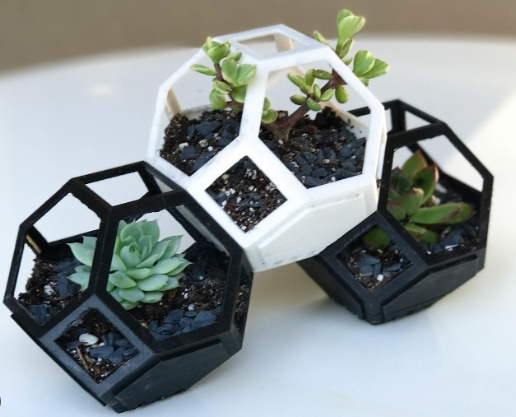
Geometric planters that complement the natural forms. For that contemporary look, geometric planters are the perfect 3D project that you can match with your modern decor. From repeated patterns to introducing texture or a hexagonal planter for that modern quality, you can find 3D models to create geometric planters.
Cat Theme
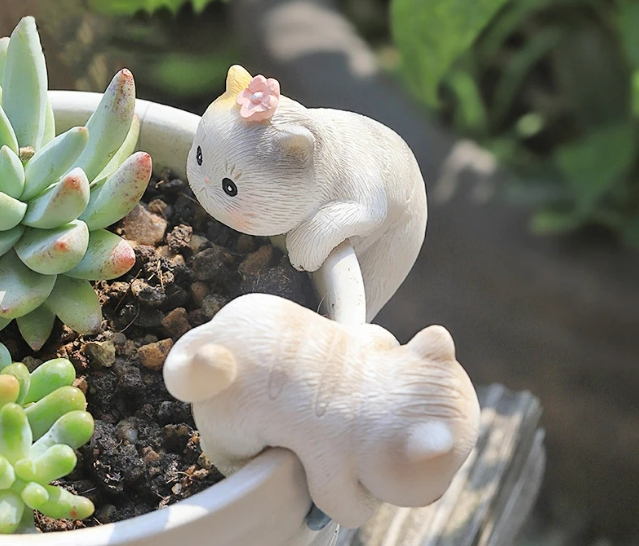
While not all my love cats, we are consistently seeing the feline planter as a popular 3D printed pot planter in many social media feeds. From cute bulbous shapes to graceful, sleek profiles, the cat 3D-printed planter is an exciting 3D project to add to your collection.
3D Printed Succulent Planters
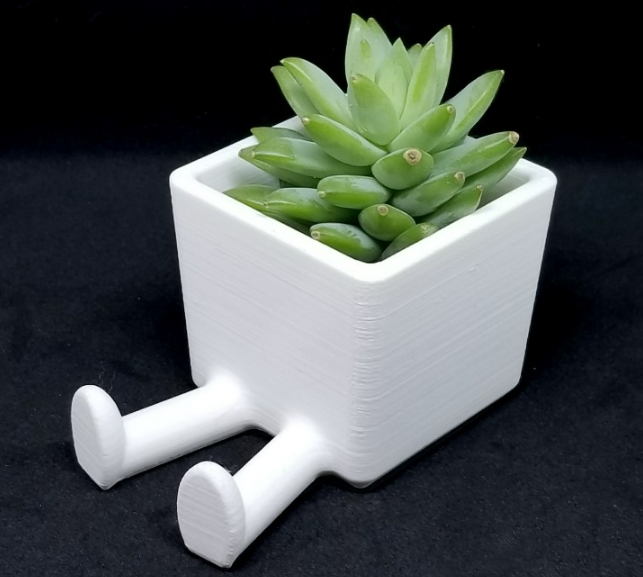
Succulent plants refer to plants that are capable of retaining moisture, have thick leaves, and are quite fleshy. Examples include cacti. Snake plants are popular in homes for their ability to reduce VOCs in the air. Since these types of plants dont require too much water, you have the freedom to design your planter without having to be concerned about handling moisture within the planting medium. However, it is recommended to check the correct printing filament, one that will work well with water and sunlight. Excess heat can deform 3D-printed objects.
Animal Crossing
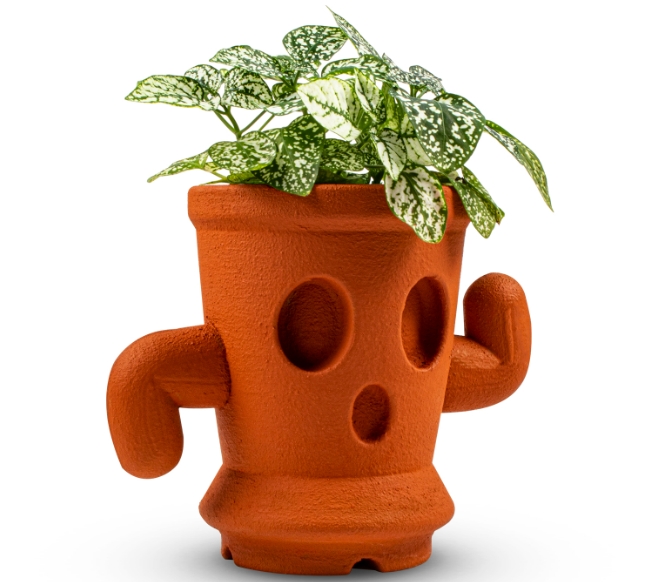
If you love real animals, you’ve probably come across the famous Nintendo game Animal Crossing. With more diversified animals and elements to choose from, you’ll find interesting personalities that come with these unique animal forms. Gyroid planters, for instance, are a popular object for 3D-printed planter pot projects. These charming characters are used as decor pieces in just perfect forms to create expressive and cute planters.
Self-Watering Planters
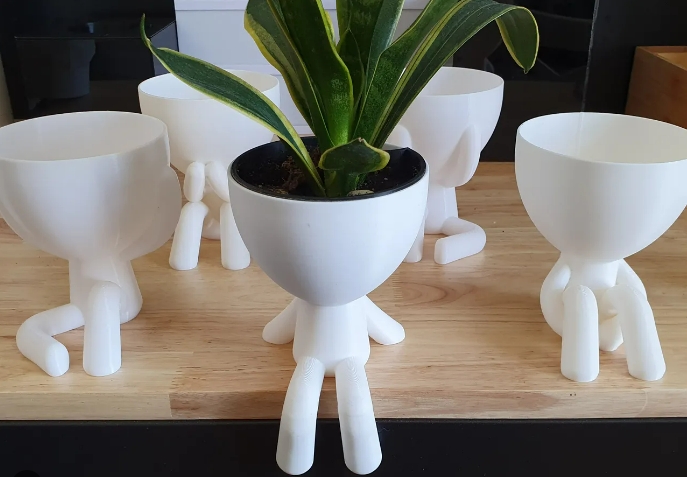
A 3D-printed self-watering plant is a planter designed to have a reservoir for water. You can customize your design or get free 3D models online. The simplest is having a secondary container to act as a reservoir fitted at the bottom of the planter. To fill this reservoir without taking it, you need a channel or chute that runs from the reservoir to the side of the planter. The opening can be easily filled with water and can also show or indicate the water level.
Tiered or multi-layered Planters
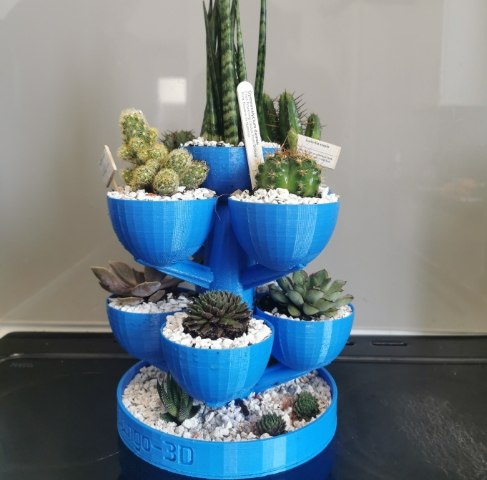
Similar to your modular planters, you need to have an accurate printed form for each component of your tiered planters to ensure they fit together. Multi-layered planters save space and can be an attractive wall décor, especially for homes with limited space. This can be more challenging, as you’ll need to print out more components to assemble the planter.
Rocket Ship or Vehicle-inspired Planters
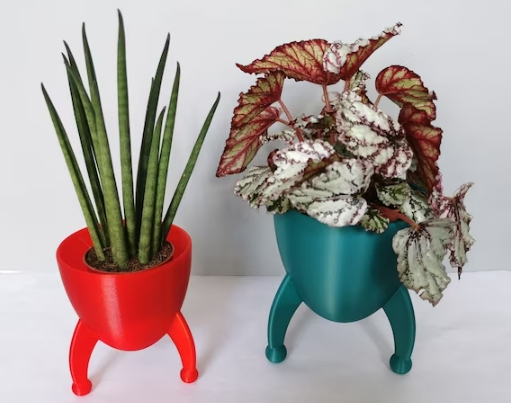
Probably the most challenging of the 3D planter themes is the car or rocket ship-inspired planter projects. As with any machine-inspired 3D model, the number of components needed can make the printing project more challenging. However, this will depend on the complexity of your 3D-printed project.
Wall Planters
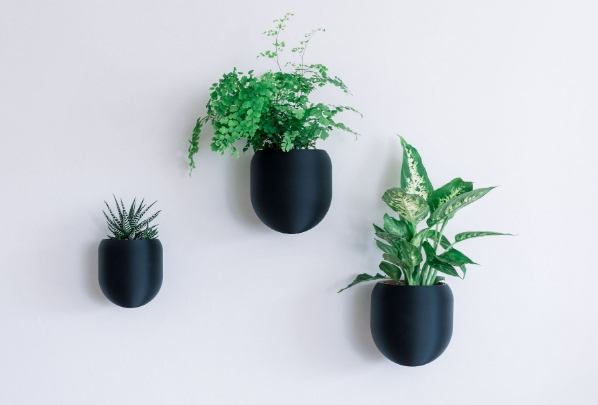
Real estate for our plants can be tricky sometimes. Access to sunlight is crucial. Thankfully, we can elevate plants by hanging them like other types of decorations. One advantage of 3D-printed projects is that they are lightweight but durable, making them a perfect wall planter. 3D-printed hanging planters are popular for adding dimension to your vertical space. You can hang several on your front door balcony from the ceiling. Line up the front of your house with potted plants; it’s a surefire way to show your love for plants.
Fruit or Vegetable-shaped Planters
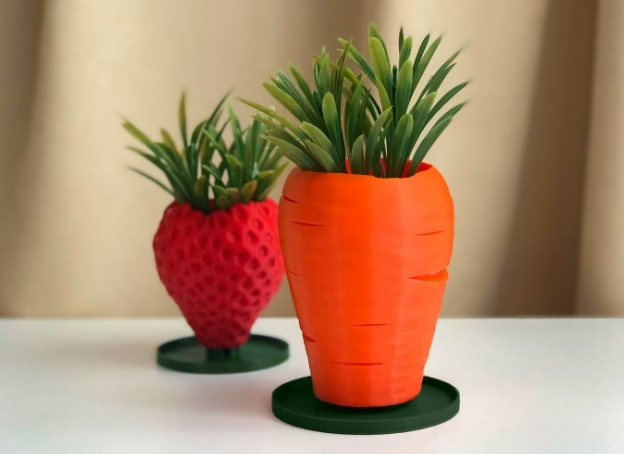
If you love Pokemon, then you’ll find the 3D-printed Bulbasaur planter the perfect next 3D printing project. But you may also find the SpongeBob Square Pants house an eye-catching feature. Aside from fruits and vegetables, other famous plant characters are exciting 3D projects to do, such as the 3D-printed Groot planter.
Mascaron or Figurehead Planters
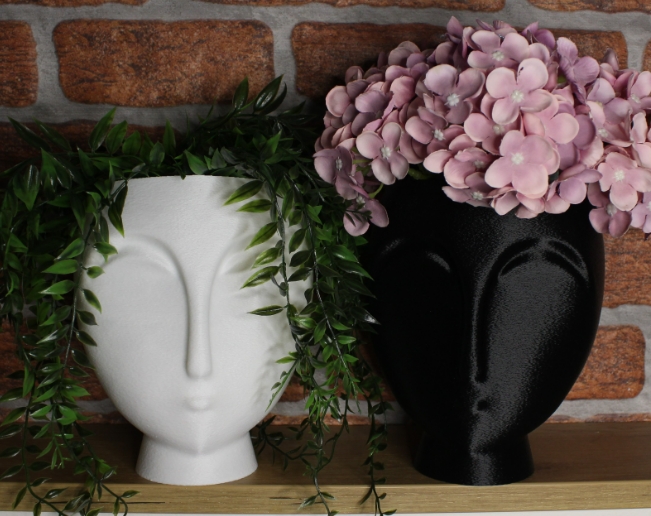
Here’s an interesting one. Take the sculpture of a head; the head could be anything, and instead of regular hair, the plant is the hair. This is a popular decoration in the home. Choices of heads and plant combinations can be as wild as ever. Example, 3D-printed skull planter. Quite the ironic mix in the case of a skull, which is commonly associated with death but also acts as a host to living plants.
Considerations for 3D Printing Planters
Filament Choices for Outdoor Use
Select materials appropriate for outdoor use, taking into account exposure to soil and water. PLA might not be the best choice; consider materials like PETG, ABS, or even specialized filaments designed for outdoor applications.
When exposed to sunlight, PLA can only survive for around 1 year, and when exposed to more than 50% humidity, it can produce poor-quality prints.
The best for outdoor use is:
- ASA 3D printing filament
- Polycarbonate filament
- PETG is good for outdoor use because of its water resistance
Layer Thickness and Durability
Plants gain weight over time as they grow, and the growing medium also gains weight when watered. But these are minor concerns, as the plastic is quite durable. However, when designing a planter, it is important to consider whether the plant will be hung or if it will be on a flat surface like a table. The heat from the sun can also warp the printed planter if it becomes too hot. If you have pets like a cat, they are known to knock things off the floor to get comfortable. Read the specifications of your material to see if it fits the purpose of a planter.
Design Considerations for Drainage
Since we are dealing with melted plastic, it doesn't have that many issues with water except for leaks. 3D printing done at home uses fused deposition modeling, that is, plastic is melted and deposited layer by layer. Those layers may not always be sealed, so when filling a 3D-printed container, water can leak through. You could use a heat gun to slowly heat the different layers to fuse them. Otherwise, tweak your settings to ensure the layers fuse well.
As for the real drainage for the plant, you can always take inspiration from planting pots you find in your local farming supplies and come up with creative ways to dispose of the excess water. Of course, consider the watering requirements of the plant. Some plants don’t want to be soaked.
Most plants want their medium damp. Design your pot in a way that will dispose of water quickly.
Some plants also don’t want their roots exposed to light; consider in your design what protects the plant. Do research on the plant and design your pot around the plant’s requirements. There are also planter designs that allow for a small water reservoir at the bottom, so you do not always have to water the plant.
Creality 3D Printer and Filament for 3D Printed Planters
Available Creality 3D Printer Series
Creality Ender Series: Best for hobbyists or those who are starting with 3D printing, which is more affordable but has reasonable pricing for its function. The Ender-3 v3 SE 3D Printer is the perfect beginner printer, providing good print quality.
Creality CR Series: Best for 3D printing larger volumes and larger planters, or more than smaller ones. The CR-M4 boasts a massive build volume of 450*450*470mm. It's a real workhorse to create big models with less or no post-processing or to batch-print more parts in one go.
Creality K1 Series: Considered the high-end or premium series of Creality.
Available Creality Filaments:
PLA - Generally a stable material to work with, but not UV-resistant. PLA filaments are best for indoor planters. An advantage of PLA is that there is a wide range of colors to choose from. Wood PLA can be a popular choice for 3D-printed planters as they exude an organic texture similar to the real wood surface. CR-Wood Printing Filament here.
This filament was a revolutionary material when it came out. It didn’t smell as bad and is more affordable than ABS. It is, however, brittle. It prints at a lower temperature and does not require a heated bed; if that’s the type of 3D printer you have, then you are in luck. This filament is not suited for outdoor applications since we are talking about planters. This is not what you should use unless your plant is indoors.
PETG - Will not easily deteriorate under sunlight exposure and is more durable than PLA and ABS. PETG can withstand higher temperatures up to 90 degrees Celsius or 160 Fahrenheit, so you don’t have to worry about warping. This makes PETG a recommended Creality filament for planters exposed to constant sunlight, and it also has good water resistance. CR PETG 1.75mm 3D Printing Filament available here.
TPU - This filament has a rubbery quality, making it best for planters that have adjustable parts or where you need squeezable pots. HP-TPU 3D Printer Filament for you.
ASA - This is best for outdoor use as it is UV-resistant, won’t deteriorate easily when exposed to chemicals, and can absorb impact better than most other filaments.
Conclusion
Come and choose your suitable 3D printer and filament, make your favorite 3D printed planter shapes, and start your DIY gardening journey. Happy Printing and Creative Life.

Recent News

8 Halloween 3D Print Ideas to Make Before October 31

Ender Series 3D Printers Parameter Comparison

Creality Back-to-School Sale 2026: Save Up to 50% on 3D Printers and More
