


CoreXY vs Bed Slinger: A Comparative Analysis of 3D Printer Motion Systems
In the realm of 3D printing, the precision and reliability of a printer’s motion system are paramount to achieving high-quality prints. Two popular designs that have emerged are the CoreXY and the Bed Slinger (also known as Cartesian) configurations. Both systems have their unique advantages and trade-offs, making them suitable for different types of users and applications.
In this article, we delve into the characteristics of CoreXY and Bed Slinger printers, comparing their performance, build complexity, and overall functionality to help you decide which might be the best fit for your 3D printing needs.
What is a CoreXY Printer?
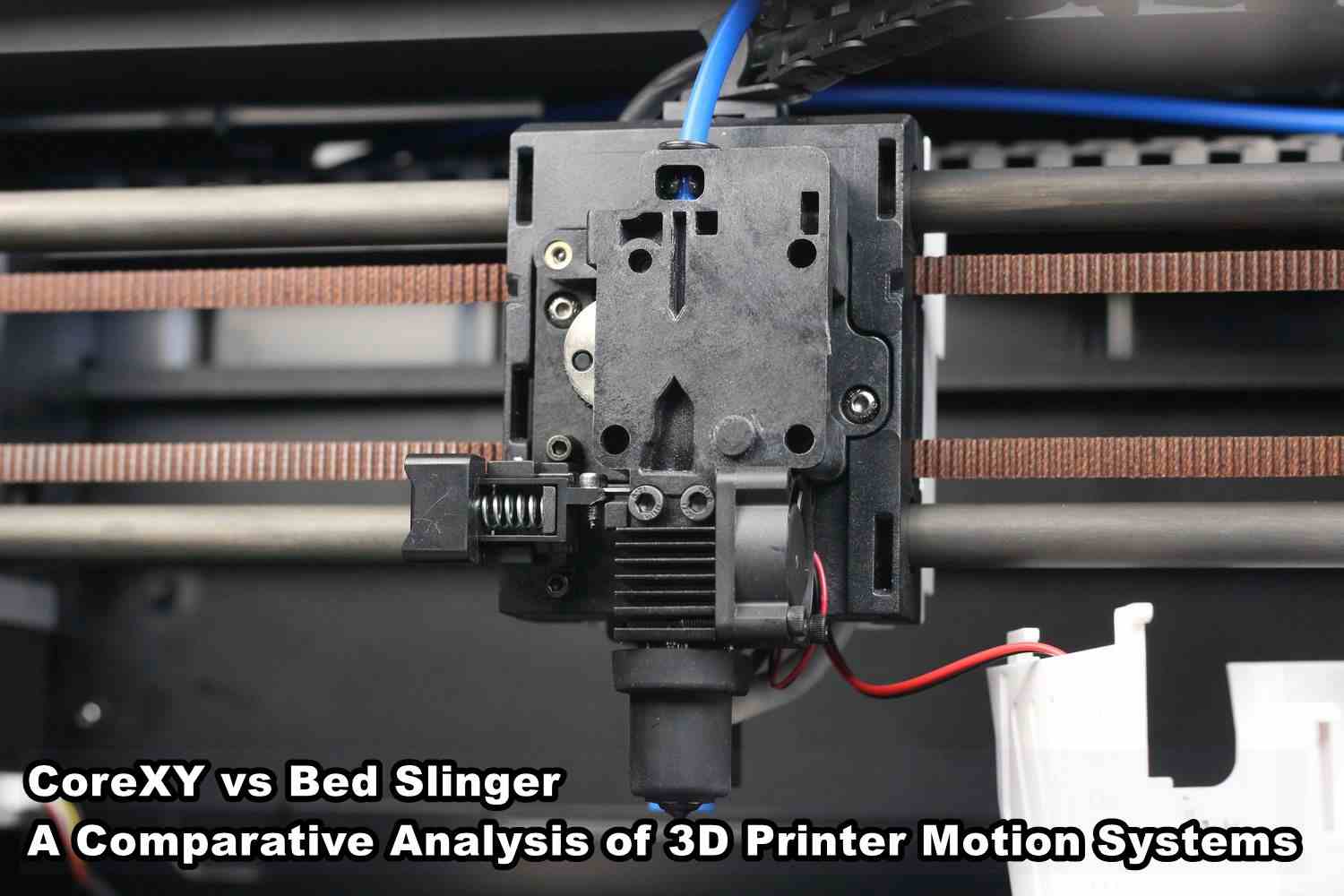
First of all , what is CoreXY Motion System? The CoreXY mechanism is a type of 3D printer design known for its lightweight and fast-moving print head. The defining characteristic of CoreXY is that the belts crisscross in a way that allows the print head to move independently of the print bed, which remains stationary during the printing process.
The CoreXY design employs a distinctive belt arrangement, enabling high-speed and precise movements, making it an ideal choice for modern, high-throughput FDM machines. Unlike traditional Cartesian printers, CoreXY utilizes two motors working together to control the printhead's movement in both the X- and Y-axes. These motors remain stationary, reducing the weight of moving parts.
The innovation lies in the belt arrangement, facilitating coordinated movement. If one motor rotates while the other remains stationary, the printhead moves diagonally; rotate both motors in the same direction, and the printhead traverses diagonally on the XY-plane. The result is a precisely controlled movement, offering advantages in speed, accuracy, and stability.
1. Advantages of CoreXY 3D Printers
- Speed: CoreXY printers are known for their high-speed performance due to the stationary motors and lighter moving parts, enabling quicker printhead movement.
- Accuracy: The design minimizes vibration-induced errors, leading to highly accurate prints even at elevated speeds.
- Compact Size: The printhead's movement along the X- and Y-axes allows for larger print volumes in smaller spaces compared to traditional Cartesian printers.
2. Limitations of CoreXY 3D Printers
- Assembly and Maintenance: The intricate belt arrangement makes assembly and maintenance complex, requiring regular upkeep to prevent wear and stretching of belts.
- Cost: CoreXY printers generally come at a higher price point due to the complexity of their design and the need for high-quality components.
- Z-axis Constraints: While excelling in X- and Y-axis movements, CoreXY printers may use more traditional methods for Z-axis movement, potentially impacting overall performance and speed.
3. Noteworthy CoreXY 3D Printers
- Creality: The Creality K1 embraces CoreXY design, offering advantages in kinematics along with a spacious build area.
- Bambu Labs: The X1 Carbon and P1P models are known for high-speed printing, showcasing the benefits of CoreXY design.
- Prusa: The Original Prusa XL marks Prusa's entry into the CoreXY market, combining CoreXY benefits with Prusa's reliability.
What is a Bed Slinger Printer?
Bed Slinger, or Cartesian printers, are the most common type of 3D printers. In this design, the print head moves along the X-axis and sometimes the Z-axis, while the print bed moves back and forth along the Y-axis. This system is relatively simple and straightforward, which has contributed to its popularity, especially among hobbyists and beginners.
In a bed-slinger printer, the print bed moves on the Y-axis (back and forth), while the print head moves on the X-axis (left and right) and Z-axis (up and down). This is the classic design for most entry-level 3D printers. The term "bed-slinger" comes from the fact that the bed is the part that "slinging" or moving rapidly during the printing process.
1. Advantages of Bed Slinger
- Simplicity: The design and mechanics of Bed Slinger printers are simpler, making them easier to build, maintain, and repair.
- Affordability: They are often less expensive than CoreXY printers, making them more accessible to a broader range of users.
- Ease of Use: New users may find the Bed Slinger system more intuitive to use and troubleshoot due to its simplicity.
2. Disadvantages of Bed Slinger
- Speed Limitations: The moving bed creates more inertia, which can limit the speed of the printer, especially for larger prints.
- Vibration: The moving bed can cause more vibration, which may affect print quality, particularly at higher speeds.
- Size Constraints: As the size of the print bed increases, the issues with speed and vibration become more pronounced, making large-format Bed Slinger printers less practical.
3. Noteworthy Bed Slinger 3D Printers
Creality offers several models of Cartesian 3D printers, each with different features, build volumes, and price points. Some of the popular models include:
- Creality Ender 3 Series: These are budget-friendly, entry-level printers that are popular among hobbyists and beginners. They come in different variations like the Ender 3, Ender 3 Pro, and Ender 3 V2.
- Creality CR-10 Series: These printers have a larger build volume than the Ender series and cater to users who need to print larger models or multiple parts at once.
Most of these printers are delivered as kits or semi-assembled units that the user needs to finish assembling at home. They are known for their affordability, ease of use, and large online community support, which makes them suitable for a wide range of users, from beginners to more experienced enthusiasts.
CoreXY vs Cartesian 3D Printers: The Differences
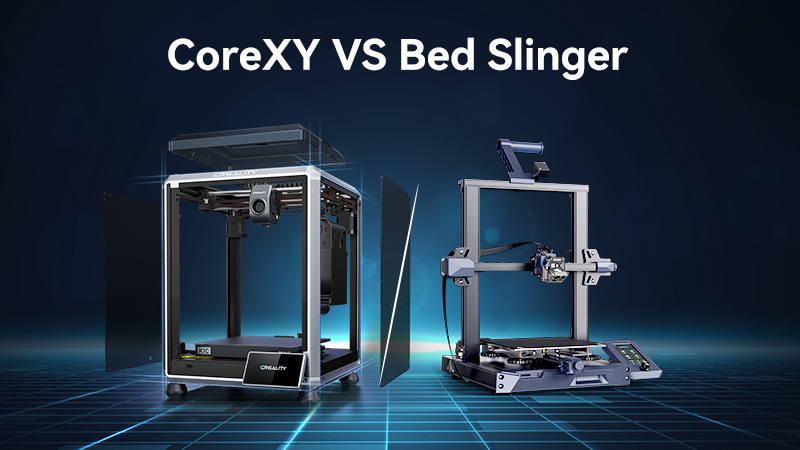
One of the primary benefits of Cartesian printers is their simplicity, which often translates to lower costs and easier maintenance. However, the separate movement of each axis can result in slower print speeds and potential quality issues due to the inertia of the moving parts, especially when dealing with larger print beds that need to move during the printing process.
Conversely, CoreXY 3D printers employ a more complex mechanism that allows for faster print speeds and potentially higher print quality. The CoreXY system uses a pair of belts that crisscross each other to control the movement of the print head along the X and Y axes simultaneously. The print bed typically only moves along the Z-axis (up and down), which means that the print head can achieve rapid and precise movements without the inertia issues that can affect Cartesian printers.
Another advantage of CoreXY printers is their efficient use of space. Since the print head is lightweight and the bed doesn’t need to move back and forth, CoreXY printers can be more compact and scalable. This makes them ideal for users who require a large print volume without a correspondingly large machine footprint.
Despite these advantages, CoreXY printers can be more complex to assemble and calibrate due to their intricate belt system. This complexity can be intimidating for beginners, and it may lead to a steeper learning curve when compared to the more user-friendly Cartesian printers.
When it comes to precision and accuracy, both printer types can achieve high-quality results, but the CoreXY’s reduced moving mass generally allows for better control during fast movements, which can translate to smoother surfaces and finer details. However, the quality of the final print also heavily depends on other factors, such as the printer’s construction, the materials used, and the user’s expertise.
In terms of cost, Cartesian printers often come out as more affordable due to their simpler design. CoreXY printers, while typically more expensive, offer advanced features that may justify the higher price for professionals or enthusiasts who demand speed and precision.
Conclusion
Ultimately, the choice between a CoreXY and a Cartesian 3D printer will depend on your specific needs, budget, and experience level. If you are new to 3D printing and looking for an easy-to-use and affordable option, a Cartesian printer might be the right choice. On the other hand, if you require faster print speeds, larger print volumes, and precise control, a CoreXY printer could be worth the investment.
It’s important to consider the long-term goals of your 3D printing projects when making this decision. Regardless of which type you choose, both CoreXY and Cartesian printers offer the ability to bring your ideas to life in three dimensions.
Recent News

8 Halloween 3D Print Ideas to Make Before October 31

Ender Series 3D Printers Parameter Comparison

Creality Back-to-School Sale 2026: Save Up to 50% on 3D Printers and More
