



Classic Ender-3 V2 Upgraded: $179.00
【Classic and Stable Integrated Design: 220*220*250mm】
【Enhanced Accuracy with CR Touch】
【Full-metal Bowden Extruder for Smooth Feeding】
【Adhesive and Bendable Build Plate】
【Quick Assembly, Easy to Handle】
【Preview the Print with New UI, Human-centered Design】
3D Printer Extruder Guide: Bowden vs Direct Extruder Detailed Comparison
all
2024-12-23 04:59:12
Use an extruder to push filament through a heated nozzle, then start your 3D printing journey. The right extruder ensures high-quality, precise, and efficient results. This article explains what a 3D printer extruder is and compares Bowden and direct extruders, highlighting their pros and cons to help you choose the best option for your needs.
What is the Extruder on a 3D Printer

An extruder is a key part of a 3D printer that melts and dispenses filament to create objects. It uses a motorized gear to push filament through a heated nozzle, melting it and depositing it in layers. Like a heart pumps blood, the extruder pumps filament to the printer's build platform. Without a good extruder, a 3D printer can't function properly.
3D Printer Extruder Components
Extruders consist of three main components: the motor, the heat sink, and the hot end. Each of these components plays a pivotal role in the smooth operation of the extruder.
1. Motor
The motor is responsible for driving the filament through the extruder, and its precision and reliability determine the consistency of the extrusion process.
2. Heat Sink
The heat sink, typically made of aluminum or copper, cools the motor and extruder parts to prevent overheating. It is critical to prevent thermal creep, which causes unwanted filament melting before the hot end.
3. Hot End
The hot end is the most critical part of the extruder and is usually composed of a heater block, nozzle, and temperature sensor. It is responsible for heating and melting the filament. Precise temperature control ensures proper extrusion and print quality.
Types of 3D Printer Extruder
There are two main types of extruders commonly used in 3D printers: Bowden and Direct Drive Extruders. Each type offers distinct advantages and disadvantages. Let's take a closer look at each one.
Bowden Extruder

In a Bowden system, the extruder is mounted on the frame of the printer, with the motor away from the hot end. Filament is fed through a PTFE tube (called a Bowden tube), resulting in a lighter extruder head, faster print speeds, and higher quality prints. It's comparable to a puppeteer controlling a puppet from a distance.
Creality initially produced many affordable and high-quality Ender series DIY 3D printers, all featuring Bowden extruders. These include models like the Ender-3, Ender-3 V2, Ender-3 Neo, Ender-3 Max Neo, Ender-5 S1, and Ender-5 Plus.
Pros
- The lightweight design allows for faster movement and better precision, which is particularly beneficial for intricate designs and detailed prints.
- Longer printing distance is useful for printing large objects, as it enables the printer to cover a greater area without the need for moving the motor itself.
- The extruder motor is located away from the heated part, making it easier to maintain and replace, which can be important for users who value ease of use and minimal downtime.
- Bowden extruders are usually cheaper than direct extruders, offering a budget-friendly solution for hobbyists and professionals alike.
Cons
- Bowden extruders are not suitable for flexible materials, as they cannot handle the pressure required to push the filament through the tube. This can limit the range of materials that can be used with Bowden setups.
- The distance between the motor and the hot end can cause issues with retraction, resulting in stringing or oozing of filament. Fine-tuning retraction settings can be more challenging with a Bowden setup.
- Bowden extruders are not suitable for printing with abrasive materials, as the PTFE tube can wear out quickly. Frequent replacement of the tube may be needed when printing with such materials.
Direct Extruder

Direct drive extruders feed filament straight from the motor to the hot end, eliminating the need for PTFE tubing. This design offers precise and immediate control, much like holding a pen directly in your hand. With hardware advancements, lighter direct extruders have become more common and now dominate the 3D printing market.
Creality follows the trend and innovates. To date, the vast majority of Creality 3D printers use direct-drive extruders, which offer stable extrusion and fewer clogs. For example, the new member of the Ender-3 V3 series, including the Ender-3 V3, V3 Plus, V3 SE, V3 KE, or the flagship K1 series. According to Creality laboratory tests, the upgraded direct-drive extruders can run continuously for more than 1,000 hours without clogging.
Pros
- Direct extruders are suitable for printing with flexible materials, providing more opportunities for printing a variety of objects with different material properties.
- They can handle abrasive materials better than Bowden extruders, making them suitable for advanced users who want to experiment with a wider array of filaments.
- The shorter distance between the motor and the hot end results in better control over retraction, reducing issues with stringing and oozing, which can improve the surface finish of prints.
- Direct extruders are more versatile and can handle a wider range of printing materials, allowing for greater flexibility in project choices.
Cons
- The added weight of the motor can affect the speed and precision of the printer. This is because the print head has to carry the additional weight, which can slow down movement and lead to potential inaccuracies in fast prints.
- Direct extruders are more complex and may require more maintenance. With more parts in proximity to the hot end, there's a higher chance of filament jams or other issues that need to be addressed.
- They are usually more expensive than Bowden extruders. The complexity and added features of direct extruders often come at a higher cost, which might be a consideration for those on a budget.
Bowden vs. Direct Extruder: A Detailed Comparison

Both Bowden and direct extruders have their advantages and disadvantages. The choice depends on your 3D printing needs, such as precision, speed, maintenance, and material suitability.
1. Printing Precision and Quality
Bowden Extruder: The lightweight design of Bowden extruders enables faster movement and greater precision for intricate designs. However, the distance between the motor and hot end can cause issues like stringing or oozing, affecting print quality.
Direct Drive Extruder: Direct extruders offer better control over filament flow, leading to consistent extrusion and high-quality prints. The short filament path ensures precise control, reducing print imperfections.
2. Printing Speed and Efficiency
Bowden Extruder: A lighter print head that enables faster speeds and better print quality at higher speeds due to reduced inertia.
Direct Drive Extruder: With a direct path from the motor to the hot end, ensuring quick response times and consistent, efficient printing.
3. Maintenance and Troubleshooting
Bowden Extruder: It is easy to maintain since the motor is away from the heating components.
Direct Drive Extruder: Due to the complex design and proximity to the hot end, can face more issues like filament clogging and may require more maintenance.
4. Material Supported
Bowden Extruder: It's not ideal for flexible materials due to pressure limitations, and unsuitable for abrasive materials because the PTFE tubes wear out quickly.
Direct Drive Extruder: Due to the complex design and proximity to the hot end, can face more issues like filament clogging and may require more maintenance.
Why Choose a Bowden or Direct Drive Extruder?
For large-scale or commercial printing, where frequent large prints or high speeds are needed, a Bowden extruder is often the better option. Its lighter print head allows for faster, more precise movement, cutting down on print times without losing quality. This can lead to higher output and lower costs.
If you're an artist, designer, or engineer who frequently prints detailed or small objects, a direct drive extruder could be the better choice. Its precise control and easily adjustable retraction settings help achieve higher print quality, especially for intricate designs. This makes it ideal for high-resolution printing, perfect for prototypes and models where detail and accuracy are crucial. For hobbyists and professionals using flexible materials, direct drive systems also provide reliable solutions, reducing common issues with these types of filaments.
Creality Best Bowden & Direct Drive Extruder 3D Printers
DIY Bowden Extruder 3D Printer
Ender-3 V2 Neo 3D Printer
Direct Drive Extruder 3D Printer
Ender-3 V3 Plus 3D Printer
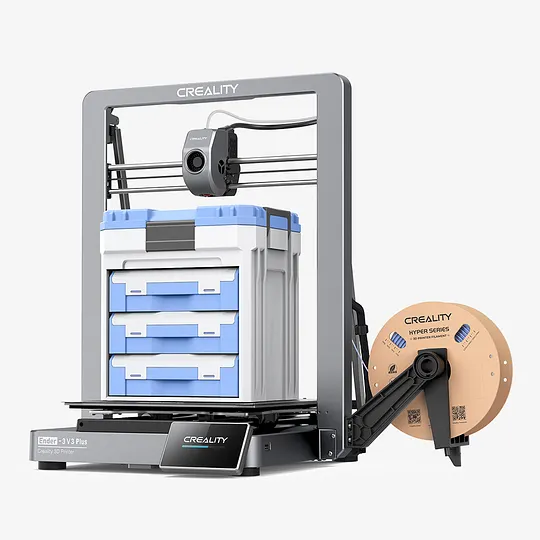
Ender-3 V3 Plus | A Big Boost to Creativity
【Plus Print Size: 300*300*330mm Build Volume】
【Heavy Duty: Y-axis Dual Motors & Support Rods】
【Spectacular Speed: CoreXZ for up to 600mm/s】
【Top-notch Performance: Reliable Clog-free Extruder kit】
【Easy Maintenance: Quick-swap Tri-metal Nozzle】
【Instant Part Cooling: Two Powerful Part Cooling Fans】
Conclusion
Choosing the right extruder for your 3D printer is critical to achieving the best results. With the right extruder, you can create high-quality 3D prints with precision and efficiency. Remember, the extruder is a key determinant of your printer's performance, so make an informed decision to ensure a satisfying 3D printing experience.
 People also read:
The 10 Best Affordable 3D Printer in 2024 >>
Recent News

all
2026-10-13
8 Halloween 3D Print Ideas to Make Before October 31
Halloween is coming, and the candy stash has already suffered a few unexplained disappearances. W...

all
2026-09-18
Ender Series 3D Printers Parameter Comparison
The Creality Ender Series has evolved significantly since the original Ender-3. What began as an ...

all
2026-08-02
Creality Back-to-School Sale 2026: Save Up to 50% on 3D Printers and More
A new school year is a chance to start fresh projects, develop practical skills and turn digital ...

all
2026-05-26
Is PLA Recyclable?
PLA is a biodegradable plastic derived from renewable resources such as corn starch or sugarcane....