


3D printing with PLA vs. ABS: Which Filament Should You Use?
Selecting the right filament is vital for successful 3D printing. This article offers a detailed comparison of PLA and ABS, two widely used filaments. We explore their properties, benefits, and drawbacks to help you make informed decisions for your specific printing needs. Understanding these materials will enhance your print quality, strength, and overall project success.
PLA Printing Filament Definition
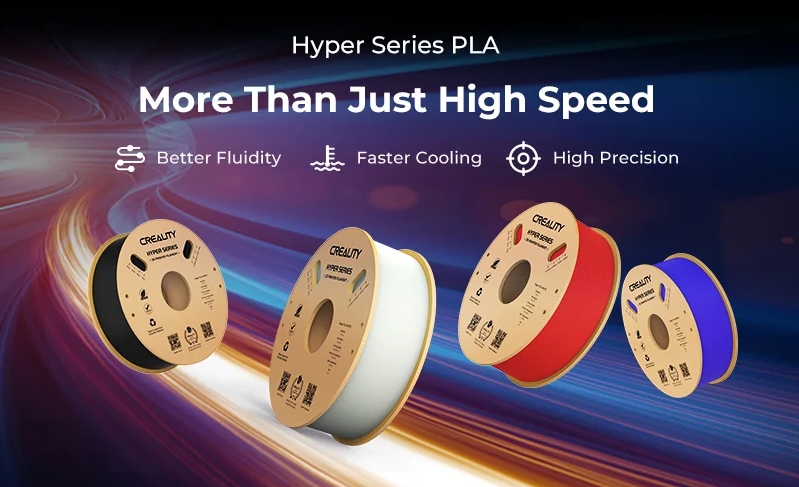
PLA (Polylactic Acid), is a biodegradable thermoplastic made from renewable resources like corn starch or sugarcane. Known for its ease of use, PLA is a popular choice for beginners in 3D printing. Click to know more detailed about PLA and PLA+.
ABS Printing Filament Definition
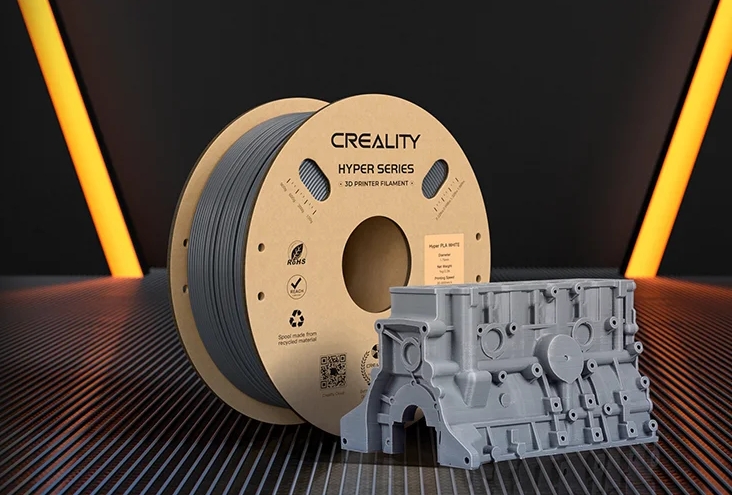
ABS (or Acrylonitrile Butadiene Styrene), is a petroleum-based thermoplastic renowned for its strength and durability. Commonly used in various industries, ABS is ideal for creating prototypes and end-use products.
Read more if you are interested in:
What is ABS 3D Printing Filament
Is ABS Plastic Safe? Reasons Why It Should Be Phased Out
PLA vs ABS: Which 3D Printing Filament Should You Use
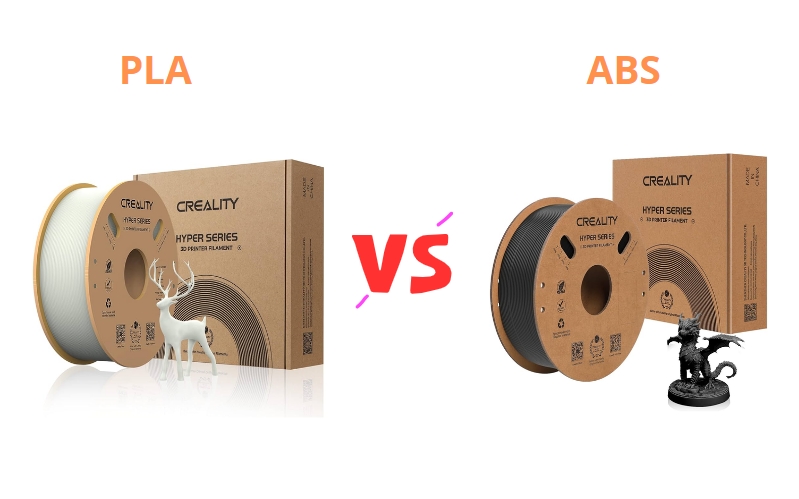
PLA and ABS differ in several key properties, including tensile strength, density, ideal applications, and printing speed. These differences will influence your choice of filament for a specific project. For more details, please refer to the comparison table of PLA and ABS below.
| Attribute | Creality Hyper PLA | Creality Hyper ABS |
| Tensile Strength | 52.9Mpa | 30.4 ± 0.6Mpa |
| Bending Strength | 92.3Mpa | 48.1 ± 0.2Mpa |
| Extruder Temperature | 190-230°C | 230-270℃ |
| Hotbed Temperature |
25℃~60℃ | 75-95℃ |
| Density |
1.0–1.4 g/cm3 | 1.25g/cm3 |
| Fans | 100% | Off |
| Filament Diameter | 1.75±0.03mm | 1.75±0.05mm |
| Impact Resistance | 10 kJ/m2 | 19 kJ/m2 |
| Use for load-bearing applications | NO | YES |
| Use in high-temperature | NO | YES |
| Eco-friendly bioplastic |
YES
|
NO |
| Recommend Print Speed | 30-600mm/s | <350mm/s |
1. PLA vs ABS:Melting Temperatures and Printing Ease
PLA has a lower melting temperature, typically around 180°C to 220°C, which makes it easier to print with and ideal for beginners. Its lower temperature reduces the risk of warping and makes it compatible with most 3D printers without requiring additional modifications.
ABS, on the other hand, melts at a higher temperature, usually between 210°C to 250°C. Printing with ABS often necessitates a heated bed to prevent warping and improve adhesion.
Despite the higher difficulty level, ABS produces more durable and impact-resistant prints, making it suitable for functional parts and prototypes.
Related articles: Best 3D Printing Temperatures for PLA, ABS, Nylon & More
2. PLA vs ABS:Durability and Strength
ABS is renowned for its strength and durability, making it ideal for functional parts that need to withstand stress.
PLA, while easier to print with, but is more brittle, making it less suitable for high-stress applications.
However, PLA can still versatile and can be used for a wide range of prints that don’t require high impact resistance.
3. Aesthetic and Finish
PLA prints often feature a smoother and more detailed finish, making them ideal for intricate designs.
While ABS prints may not be as smooth initially, they can be treated with acetone for a professional finish.
The choice between PLA and ABS often depends on the desired aesthetic of the final print. Both filaments come in a wide range of colors and finishes.
4. Environmental Impact and Safety
The environmental impact of a filament is an important factor to consider.
PLA, a biodegradable thermoplastic made from renewable resources, is a more eco-friendly option. In contrast, ABS is a petroleum-based thermoplastic.
Despite PLA’s environmental benefits, both filaments have their own safety considerations during printing.
5. Biodegradability and Recycling
PLA is biodegradable and can be composted under industrial conditions.
ABS, while not biodegradable, can be recycled. However, the recycling process for ABS is more complex than for PLA.
6. Health Considerations During Printing
When heated, ABS can release fumes that may be harmful if inhaled, so it’s important to print in a well-ventilated area.
PLA does not release harmful fumes during printing. However, both filaments can potentially cause nozzle clogging if not handled properly.
7. Indoor vs. Outdoor Use
PLA is prone to degradation when exposed to heat and UV light for extended periods, making it less suitable for outdoor use.
On the other hand, ABS is resistant to high temperatures and weathering, making it a better choice for outdoor applications.
8. Storage and Care
Both PLA and ABS require proper storage to maintain their quality. These filaments are highly absorbent and light-sensitive, so they should be kept in a dry, cool place or use a filament drybox. Careful handling is also necessary to prevent damage or deformation.
9. Price and Accessibility
When it comes to price, PLA and ABS are quite comparable. However, the cost can vary depending on the brand and quality of the filament. For example, Creality Hyper Series ABS 3D Printing Filament 1kg usually costs ~$24.00,Creality Hyper Series PLA 3D Printing Filament 1kg costs ~$22.00. You can save money by shopping filament combo sales, such as getting 5 spools for the price of 4.
Conclusion
In summary, both PLA and ABS have their pros and cons. Your choice should depend on your specific needs, printing capabilities and environmental considerations. For beginners and hobbyists, PLA is often the better choice. It's easier to print with and doesn't require a heated bed. For more functional parts and prototypes, ABS is more suitable. It's stronger, more durable, and can withstand higher temperatures.

Recent News

8 Halloween 3D Print Ideas to Make Before October 31

Ender Series 3D Printers Parameter Comparison

Creality Back-to-School Sale 2026: Save Up to 50% on 3D Printers and More
